Hula
All about my service dog Hula! (And service dogs more generally)
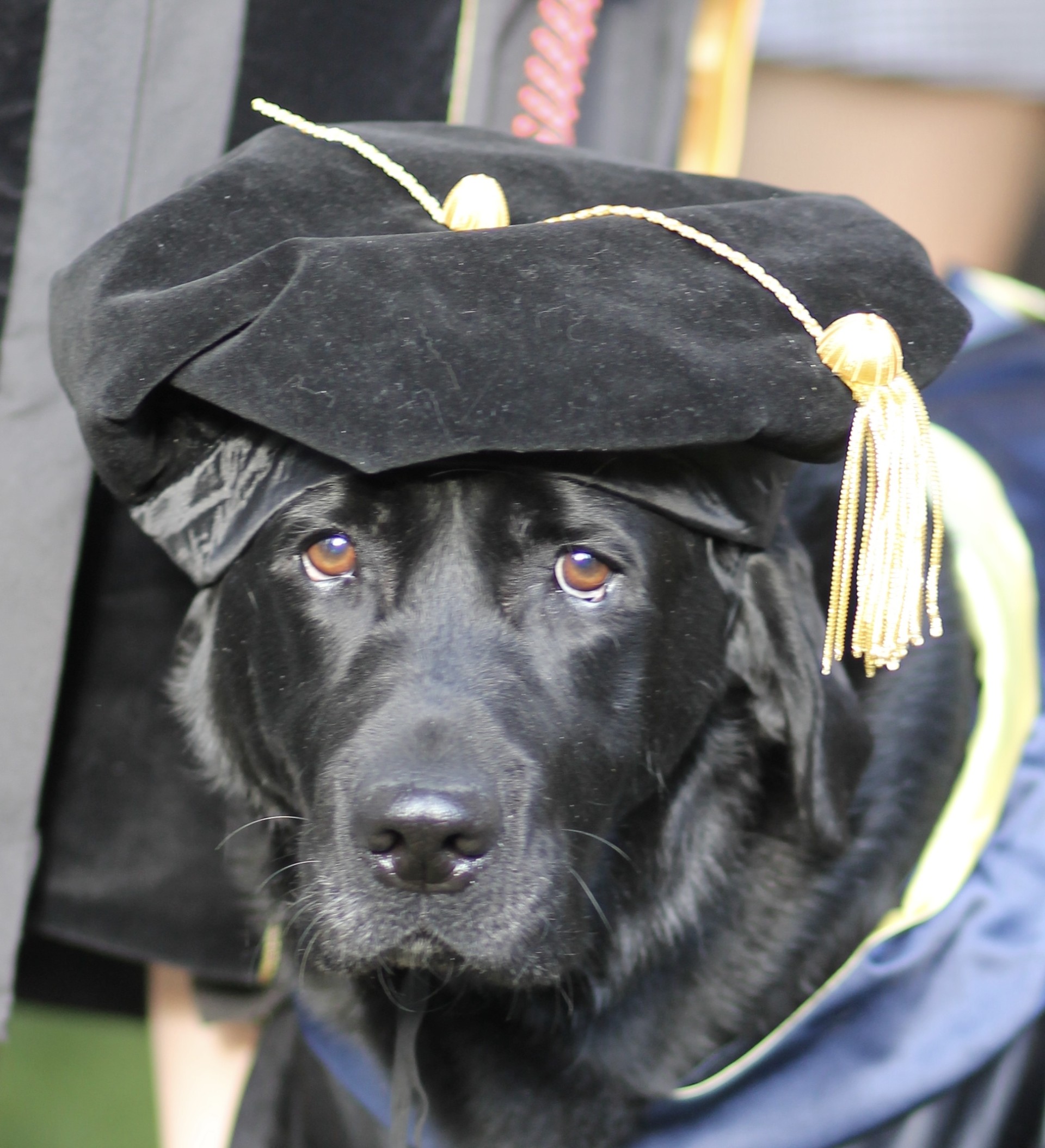
Hula is a black lab born in 2023. She was trained by Assistance Dogs of the West in Santa Fe, New Mexico before being placed with me as my service dog. Hula goes everywhere with me, including travel, classes, and even the robotics lab. She’s never met a dog she didn’t like and loves running around the yard like a lunatic when she’s off duty.
Hula FAQs
Does Hula like her job?
Hula is a purpose-bred dog. This means that her parents were specifically chosen to produce working dogs. From those puppies, only a few will end up being service dogs. Hula likes to work, though she’s definitely happy to have an office job and not be running around all day!
Why did you name her Hula?
I actually didn’t name her! Hula has an official AKC name, and Hula is her daily name based on her official name.
How did you choose Hula?
I didn’t! I was matched with Hula by the organizaton that trained her. When it became clear that Hula was going to graduate the program and be a working dog, the organization set her up on interviews to see who she clicked with. I went on a lot of dog interviews myself. We were matched because Hula’s desired working conditions and what she enjoyed were a good fit for my needs and lifestyle, and when we met we really clicked.
How does Hula know when she's working and when she's off duty?
The vest is her number one cue that she’s on duty. When she’s not vested she still does tasks if need be, but knows she can sniff and things like that. She loves to put her vest on and go to work but also loves her off time.
What does Hula like to do when she's not working?
Mostly she likes to snooze on the couch, run in the yard, and chew on pinecones.
Does Hula have a favorite place to go?
Costco. Not even close. Costco when they have the samples out is probably the greatest place on earth to her. Top it off with a walk past the foodcourt on the way out and she’s had the best day ever. When we lived in Colorado, she also really enjoyed Denver International Airport. No idea on that one.
Does Hula ever make mistakes?
Yup! Like all of us, she gets sick, has off days, and wakes up on the wrong side of the bed sometimes.
How much training did Hula receive?
Hula was trained until 2.5 years old by an organization in Santa Fe. From puppy raisers to trainers, probably a dozen people worked with her from birth to placement to train her. Training service dogs is nonstop, and every moment is a learning opportunity for their future job. She’s received tens of thousands of hours of training in all sorts of environments, which is why she’s such a rockstar.
Does Hula have a retirement plan?
Hula’s program has a mandatory retirement age, so in the lead up to that I’ll begin the process of being matched with a successor dog. Hula will gradually retire as my service dog and live out her golden years with my family.
What is Hula's biggest personality quirk?
Hula absolutely despises tables that have legs that cut into her space under the table. She makes her displeasure known with big sighs and grumbling to let you know there’s not enough room to lounge under the table.
Some service dog FAQs
What is a service dog?
A service dog is a dog individually trained to perform specific tasks that mitigate a person’s disability. Service dogs are working animals, not pets.
What is the difference between a service dog and an emotional support animal?
Service dogs are trained to perform disability-related tasks. Emotional support animals provide comfort through their presence but are not trained to perform specific disability-related tasks.
Can I pet a service dog?
Generally, no. Always ask first, and understand that the handler may say no.
Why does a service dog sometimes look like it's doing nothing?
Working doesn’t always look like performing an obvious task. A service dog may be monitoring its handler, maintaining a position, providing assistance, or simply waiting for the next cue. The ability to be calm and “do nothing” in public is actually a big part of being a successful service dog.
Why does a service dog need to go everywhere with its handler?
Service dogs accompany their handlers because their work is directly connected to the person’s ability to navigate daily activities. Leaving the dog behind may mean leaving important disability-related assistance behind as well.
Can service dogs go into restaurants, stores, classrooms, and other public places?
In the United States, trained service dogs generally have broad access to places open to the public under the Americans with Disabilities Act (ADA), with some specific exceptions. Hula also has public access in other countries due to her being trained by an Assistance Dogs International member organization